
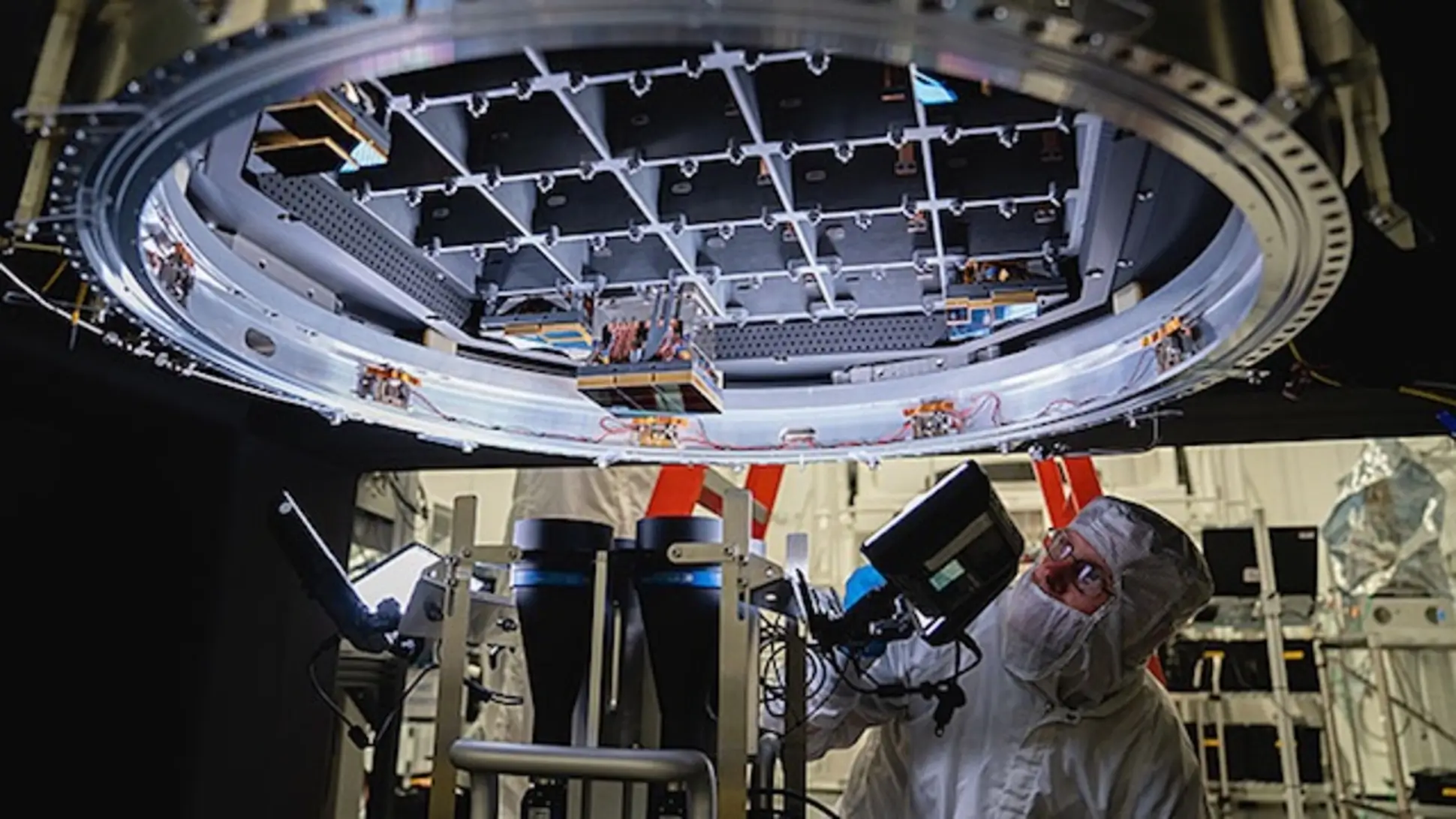
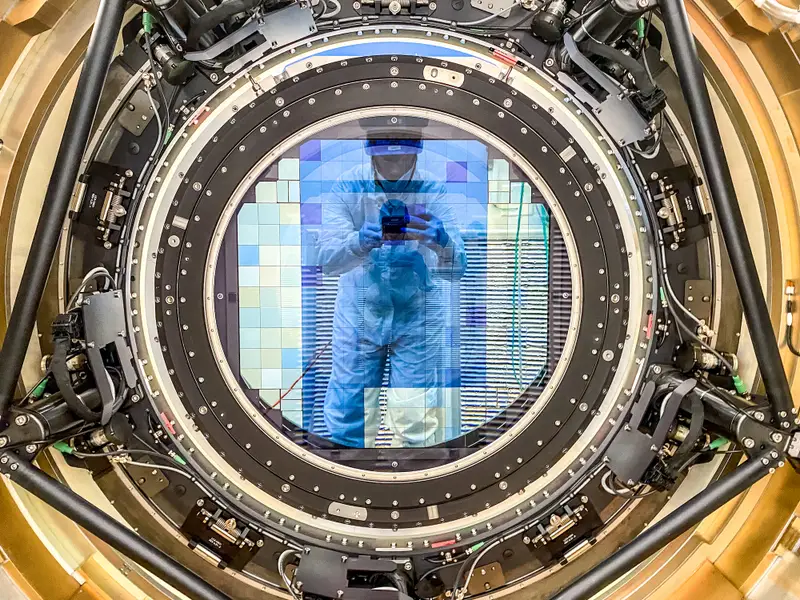
Scientists at Menlo Park Laboratory in California have completed the world’s largest digital camera, the Legacy Survey of Space and Time (LSST). It weighs about three tons, has a front lens more than 1.5 meters wide, and has an image resolution of 3200 megapixels.
Scientists and engineers from the U.S. Department of Energy’s SLAC National Laboratory have been building this lens for two decades at approximately $168 million. Finally, the camera is complete and ready to be shipped to the Rubin Observatory in Chile. Engineers plan to install it there this year.
Goals and opportunities
The camera will capture the Southern Hemisphere sky for ten years, scanning the entire sky every night, resulting in the largest astronomical movie in history.
The LSST will take approximately 1,000 images each night, stitching them together to create one highly detailed picture of the Southern Hemisphere sky. In 10 years and tens of thousands of images, the researchers plan to obtain the first 3D movie of the Universe.
LSST will not rotate. If something happens in the Southern Hemisphere’s sky, this giant camera will record the changes as it surveys the entire area. Thanks to this, scientists can detect asteroids that may have gone unnoticed until now.
The camera will also warn astronomers about any changes in the sky. This will allow scientists to point their telescopes at astronomical phenomena and study them in more detail.
LSST’s ability to track galaxy changes over a decade will also give scientists a new understanding of how the Universe has evolved over time and what role dark energy and dark matter play in this process.